
DRYING AND POWDER PROCESSING SOLUTIONS
New Energy & Advanced Materials
Drying Solutions for Controlled Powder Production. New-energy and advanced-material production may require close control of moisture, temperature history, particle formation, contamination, oxidation, solvent handling and powder containment. QUANPIN evaluates the complete route from feed preparation through drying, recovery, cooling and discharge, then configures the equipment around the material data, target product specification and site requirements.

Materials and Applications
Potential applications include battery cathode materials and precursors, battery anode materials, conductive and functional powders, metal compounds, inorganic materials, and selected solvent-containing or oxygen-sensitive products. Suitability is not assumed from the material name alone; it must be confirmed from composition, feed form, safety data, required purity and downstream use.
Key Processing Challenges
• Final moisture and residual-solvent control within the agreed product specification.
• Temperature management for heat-sensitive or reaction-sensitive materials.
• Particle-size distribution, bulk behavior and powder recovery requirements.
• Control of metal contamination, cross-contamination and exposure to ambient air.
• Integration with upstream feed preparation and downstream cooling, transfer or packaging.
System Integration and Safety
The project specification defines product-contact materials, feed and discharge containment, heating and cooling utilities, filtration, oxygen monitoring, inert-gas control, solvent condensation and recovery, explosion-protection measures, cleaning strategy and automation scope. These features are selected according to material safety characteristics, applicable standards and the agreed division of supply.
Drying Route Selection by Feed Form
The process route is selected from material properties, containment needs and product objectives
FEED FORM
Slurry or Solution
Particle formation required
PROCESS ROUTE
Spray Drying
Open or closed-loop system
PROCESS OBJECTIVE
Engineered Powder
Moisture and particle control
FEED FORM
Wet Cake or Paste
Dispersion required
PROCESS ROUTE
Spin Flash Drying
Continuous dispersion and drying
PROCESS OBJECTIVE
Continuous Powder
Controlled final moisture
MATERIAL CONDITION
Sensitive or Solvent-Bearing
Atmosphere control required
PROCESS ROUTE
Vacuum / Closed Loop
Reduced oxygen or solvent recovery
PROCESS OBJECTIVE
Controlled Processing
Containment and recovery
Process Routes
Spray Drying: For pumpable solutions or slurries where drying and particle formation are combined. Depending on the solvent and atmosphere requirements, the system may use an open-air or closed-loop configuration.
Spin Flash Drying: For selected wet cakes and pastes that require metered feeding, mechanical dispersion and rapid gas-solid contact in a continuous process.
Fluid Bed Drying and Cooling: For suitable powders or granules requiring controlled drying, cooling or residence time. Closed-circuit arrangements may be evaluated where the material and process require them.
Vacuum and Closed-Loop Drying: For heat-sensitive, oxygen-sensitive or solvent-bearing materials where reduced pressure, inert-gas circulation, containment or solvent recovery is required.
Conductive Drying: For selected high-solids or particulate materials where indirect heat transfer and controlled solids movement suit the product and production objective.
System Integration and Safety
The project specification defines product-contact materials, feed and discharge containment, heating and cooling utilities, filtration, oxygen monitoring, inert-gas control, solvent condensation and recovery, explosion-protection measures, cleaning strategy and automation scope. These features are selected according to material safety characteristics, applicable standards and the agreed division of supply; they are not universal standard features of every dryer.
Pilot Testing and Process Confirmation
Where representative material is available, laboratory or pilot testing can be used to observe feed behavior, drying response, powder recovery and product condition. Test findings support process-route evaluation and preliminary operating ranges, while final guarantees and acceptance criteria are established in the project specification.
Recommended Products

Spray Dryer
LPG Series High Speed Centrifugal Spray Dryer

Spray Dryer
YPG Series Pressure Spray Dryer
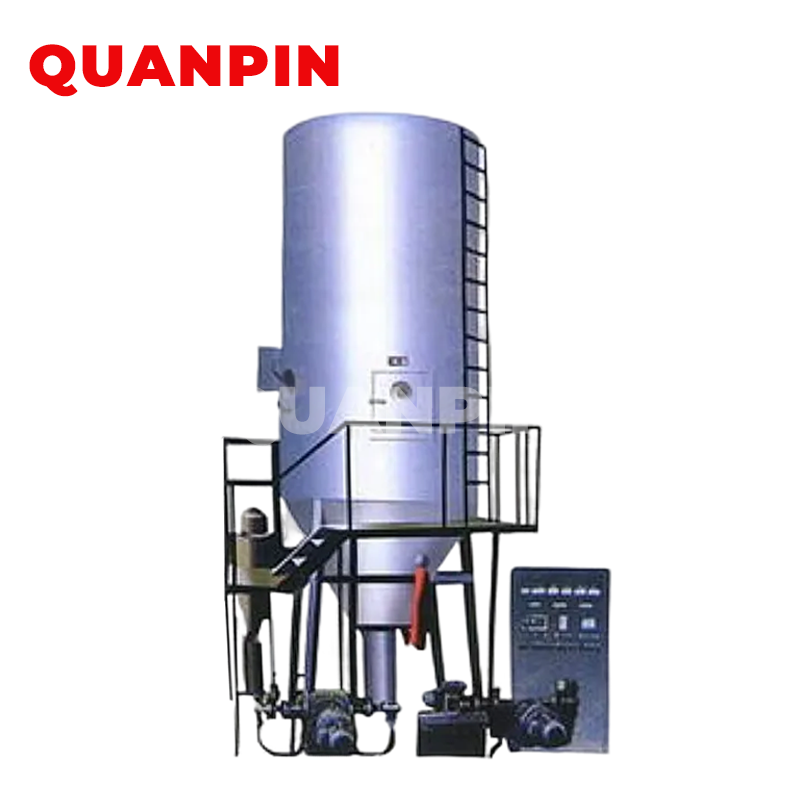
Spray Dryer
YPG Series Pressure Spray Dryer

Airflow Dryer
XSG Series Spin Flash Dryer

Vacuum Dryer
SZG Series Double-Cone Rotary Vacuum Dryer

Vacuum Dryer
GLZ Series Single Cone Screw Ribbon Vacuum Dryer

Vacuum Dryer
LJG Series Vertical Agitated Vacuum Dryer

Contact Dryer
PLG Series Continuous Disc Dryer